
CVML 2026
2026 2nd International Conference on Computer Vision and Machine Learning
September 18-20, 2026 Nanchang·China aoagpublish@outlook.com
2026 2nd International Conference on Computer Vision and Machine Learning
September 18-20, 2026 Nanchang·China aoagpublish@outlook.com

Prof. Yang Yue - Optica Fellow, SPIE Fellow
Speech title: Deep-Learning-Based Multiparameter Optical Performance Monitoring
Speech abstract: In recent years, machine learning has come to the forefront as a promising technology to aid in optical performance monitoring for multiparameter communications channels. In this talk, we will introduce CNN-based techniques to effectively monitor multiple system performance parameters of optical channels using eye diagram measurements. Experimental results demonstrate this method achieves a prediction accuracy >98% when tasked with identifying the modulation format (QPSK, 8-QAM, or 16-QAM), as well as the optical signal-to-noise ratio (OSNR), roll-off factor (ROF), and timing skew for 32 GBd coherent channels. For PAM-based intensity-modulation direct detection (IMDD) channel eye-diagram-based CNN method maintain >97% identification accuracy for 432 classes under different combinations of probabilistic shaping (PS), ROF, baud rate, OSNR, and chromatic dispersion (CD) by each modulation format. Furthermore, we undertake on an extensive comparison of ResNet-18, MobileNetV3 and EfficientNetV2. Our designed VGG-based model of reduced layers, alongside the lightweight MobileNetV3, demonstrates enhanced cost-effectiveness while maintaining high accuracy. Finally, we use GBDT method combined with AAH to demonstrate PAM signal performance monitoring, achieving a 97.54% accuracy for jointly monitoring 4 parameters, and by using moving average preprocessing, the accuracy of dispersion monitoring is above 93%.
Bio: Yang Yue (Fellow, Optica; Fellow, SPIE) received his B.S. and M.S. degrees in electronic information science and technology and optics from Nankai University, Tianjin, China, in 2004 and 2007, respectively, and his Ph.D. degree in electrical engineering from the University of Southern California, Los Angeles, USA, in 2012. From 2012 to 2021, he worked in Silicon Valley semiconductor and network equipment companies in the United States. In 2021, he joined Xi’an Jiaotong University as a professor under the University’s “Young Top-Notch Talent Support Program”. He is the founder and current Principal Investigator of the intelligent Photonics Application Technology Laboratory (iPatLab).
Prof. Yue has published over 300 papers, including one in Science, more than 20 invited papers, two English monographs (Elsevier, Springer Nature), eight edited English books, and two English book chapters. He holds over 50 granted patents (including 30 U.S. patents and 6 European patents). His Google Scholar citations exceed 14,000. He has been invited to deliver more than 200 talks, including one tutorial, over 30 plenary lectures, and more than 100 keynote speeches. He has led more than 10 national, provincial, and industrial research projects with a total budget exceeding 10 million RMB.
Prof. Yue currently serves as an Associate Editor for IEEE Access and Frontiers in Physics, a member of the editorial board for four journals including Sensors, a guest editor for more than ten special issues (e.g., J. Lightw. Technol.), and has chaired over 100 international conferences. He also serves as a reviewer for more than 80 academic journals. His recent research interests include intelligent photonics, optical communications, optical sensing, and optical chip technology.

Prof. Maode Ma-IET Fellow
Speech title: An Automatic Incremental Lifetime Learning IDS
Speech abstract: Traditional Intrusion Detection Systems(IDSs) provide limited defense against emerging threats, as they rely on static rules or machine learning (ML) models that lack the capacity for real-time updates. The Incremental Lifetime Learning IDS (ILL-IDS) is a new type of IDS to address this limitation by enabling adaptive learning of new attack types. However, ILL-IDS depends heavily on large volumes of high-quality labeled data, making the model update process costly and labor-intensive. In this talk, the Automatic Incremental Lifetime Learning IDS (AILL-IDS) is introduced, which is a novel IDS framework that can significantly reduce the need for labelling data by incremental semi-supervised learning. This approach not only enables AILL-IDS to detect unknown types of attacks and adapt its model dynamically with minimal labeled data but also ensures continuous detection during the model update process, enhancing both speed and accuracy in threat detection in vehicular networks or Internet of Things (IoT) systems. Experimental results demonstrate that AILL-IDS can achieve a high detection rate of 0.97 and an average F1 score of 0.90, labelling only 5.5% of the total training data, thereby offering an efficient and scalable solution for securing IoT against emerging cyber threats.
Bio: Prof. Maode Ma, a Fellow of IET, received his Ph.D. from the Department of Computer Science at the Hong Kong University of Science and Technology in 1999. Prof. Ma is a Full Professor in the Faculty of Computer Science and Artificial Intelligence at Shenzhen University of Advanced Technology. Before joining SUAT, he had been a faculty member at Nanyang Technological University and Qatar University for over 25 years. He has extensive research interests in network security, AI security, and wireless networking. He has about 550 international academic publications, which include more than 280 journal papers. His publications have received close to 13,000 citations in Google Scholar. Prof. Ma currently serves as the Editor-in-Chief of the Journal of Communication and Network Security, the International Journal of Computer and Communication Engineering, and the Journal of Communications. He also serves as a Senior Editor for IEEE Communications Surveys and Tutorials, and an Associate Editor for the International Journal of Communication Systems. Prof. Ma is a senior member of the IEEE Communication Society. Prof. Ma has been a Distinguished Lecturer for the IEEE Communication Society from 2013 to 2016 and from 2023 to 2024.
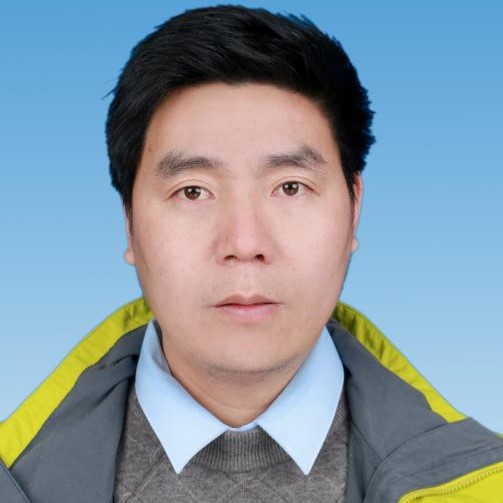
Prof. Qiegen Liu-IEEE Senior Member
Speech title: to be updated
Speech abstract: to be updated
Bio: Prof. Qiegen Liu is a recipient of the National Excellent Young Scientists Fund, a full professor and doctoral supervisor, an IEEE Senior Member, and the Executive Dean of the School of Information Engineering at Nanchang University.His research is dedicated to the development and algorithmic study of intelligent imaging and visual display systems. He has co-authored over 200 papers in prestigious journals including Nature family journals, IEEE Transactions, and other leading journals in imaging and visual display, with more than 6,000 citations on Google Scholar. He has also contributed to 6 monographs and textbooks as a co-author/editor. Prof. Liu serves as a committee member for dozens of domestic and international academic organizations, including IEEE and the Chinese Society for Stereology, and is on the editorial boards of multiple journals, such as IEEE Transactions on Medical Imaging, Journal of Electronics and Information Technology, Acta Photonica Sinica, and CT Theory and Applications. He has led over 30 research projects, including those from the National Key Research and Development Program, the National Excellent Young Scientists Fund, the Key Program of the Joint Fund of the National Natural Science Foundation of China, the Key Research and Development Program of Jiangxi Province, the “Reveal and Lead” program, and cooperative projects with Huawei. He has received 8 scientific and technological awards, including the First Prize of the Natural Science Award of Jiangxi Province, the Second Prize of the Natural Science Award of the China Society of Image and Graphics, and the First Prize of the Wu Wenjun Artificial Intelligence Technology Invention Award. In addition, he has been honored with nearly 10 distinctions, such as the Youth Science and Technology Award of the Chinese Society for Stereology, and has been listed in the World's Top 2% Scientists ranking.
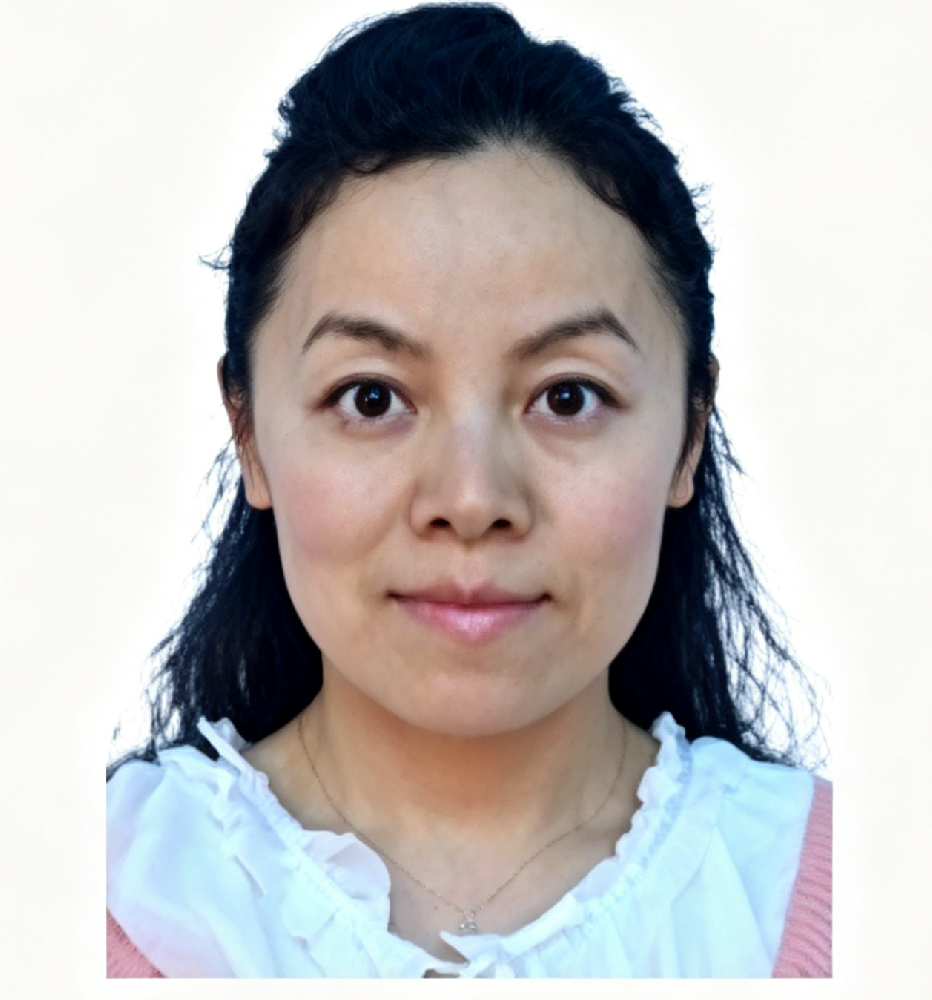
Prof. Wei Peng - IEEE Senior Member
Speech title: A Universal Channel Prediction Model for Multi-Domain Multi-User Cooperation
Speech abstract: Channel prediction can effectively alleviate the overhead of channel state information acquisition. Although existing foundation models for channel prediction perform well in fixed scenarios, their generalization capability in dynamic environments remains challenging. To address this issue, we propose a location-assisted multi-user cooperation scheme to enhance channel prediction performance in dynamic communication environments. The proposed model enables cross-modal fusion of multi-user location information and multi-dimensional channel state information, while also demonstrating efficient contextual understanding and generative reasoning capabilities. Meanwhile, through low-rank compression, it maintains low storage requirements and inference costs. Experimental results show that, in comparison with existing baselines and their ablated variants, our prediction model achieves state-of-the-art performance in multiple aspects under both unified learning and zero-shot generalization settings.
Bio: Professor Wei Peng is a Professor and Doctoral Supervisor at Huazhong University of Science and Technology. She holds the titles of Chutian Scholar of Hubei Province and Distinguished Huazhong Scholar. She received her Ph.D. from the University of Hong Kong, and previously served as an Assistant Professor at Tohoku University in Japan and as a Visiting Scholar at Columbia University in the United States. Her research interests include integrated sensing and communications, artificial intelligence, physical layer security, and the electric power Internet of Things. She has published over 100 high-quality papers in prestigious journals such as the IEEE Internet of Things Journal, IEEE Transactions on Communications, IEEE Transactions on Vehicular Technology, IEEE Communications Magazine, and IEEE Network Magazine, as well as in leading international flagship conferences. She is the author or co-author of 4 textbooks in both Chinese and English. She holds more than 20 granted invention patents and has received the Best Paper Award three times at top international conferences. She has successively undertaken research projects including the National Key R&D Program of the Ministry of Science and Technology, the 863 Program, and the Young Scientists Fund, General Program, and Key Program of the National Natural Science Foundation of China.
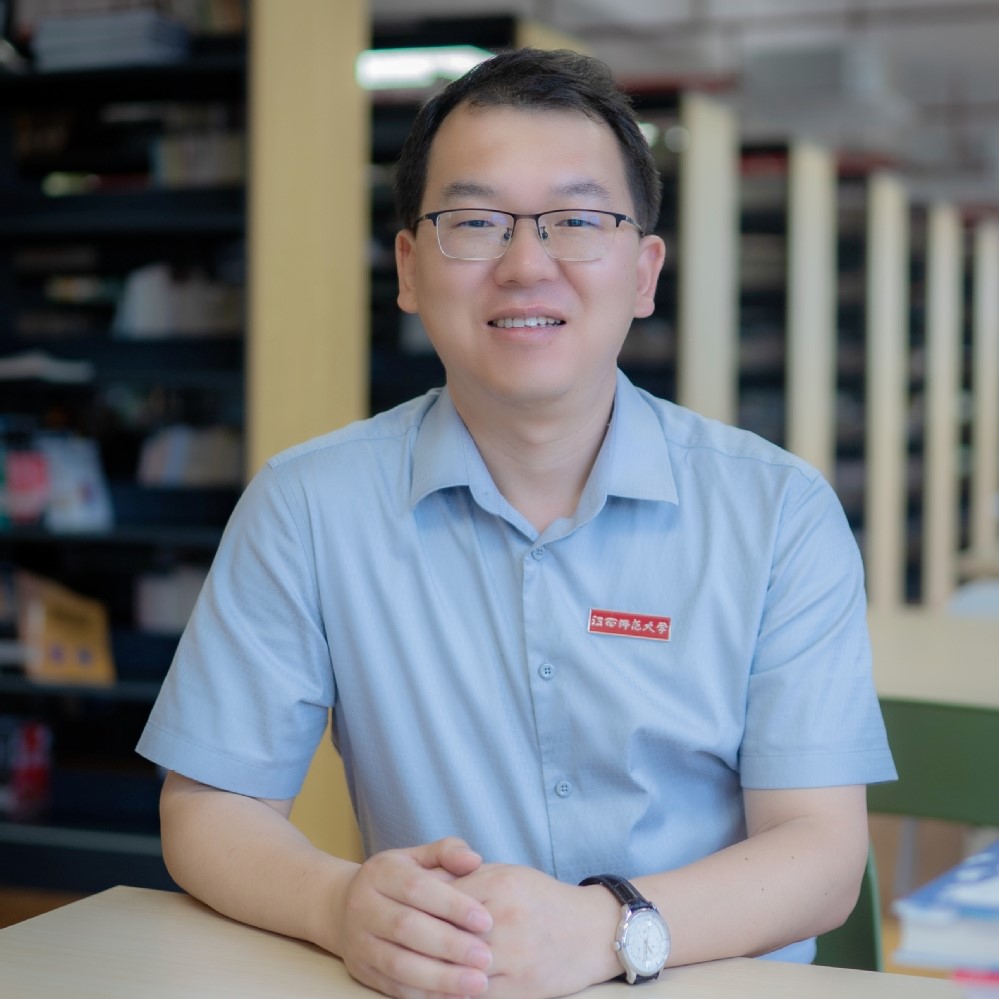
Prof. Aiwen Jiang - CCF Senior Member
Speech title: to be updated
Speech abstract: to be updated
Bio: Aiwen Jiang (born July 1984), Ph.D., Professor, is currently the Executive Dean of the College of Digital Industry and the Chair of the Degree Committee of the College of Computer and Information Engineering at Jiangxi Normal University. He is a member of the Technical Committee on Pattern Recognition and Machine Intelligence of the Chinese Association of Automation, a member of the Technical Committee on Pattern Recognition of the Chinese Association for Artificial Intelligence, and a Senior Member of the China Computer Federation.